
When Creativity Stops Flowing, Start Asking Questions
On curiosity, courage, and finding your way back to flow.

Lately, I’ve realised how easy it is for me to slip into doing mode. I run a small studio from home, I have a family to care for, and it felt like there are always more tasks than hours in the day. Somewhere along the way, I buried myself in to-do lists, convinced that being efficient was the best way to manage my time - and maybe even my creativity.
But after a while, I noticed a kind of dullness creeping in - not burnout exactly, but a quiet sense that my mind wasn’t as sharp or curious as before. I was still producing, still ticking boxes, but struggling to come up with new ideas. I’d look at other creators making brilliant things and feel small, as if their minds were somehow brighter than mine.
And then I came across an article that struck a deep chord with me: “The reason you don’t feel smart is because you’ve stopped asking questions” by Sabine Carys.
It felt like someone just handed me the missing words for this feeling I couldn’t quite explain.
When we stop asking questions
The article describes a state many of us quietly relate to - the unspoken feeling of not being as sharp, as quick, or as “smart” as people we look up to. We rarely admit it out loud, but it lingers underneath: the sense that we’ve somehow fallen behind, that our minds aren’t as active or curious as those of people who seem effortlessly intelligent.
Sounds familiar?
Well, what if the reason we sometimes feel “less smart” isn’t that we’ve lost our ability to think - it’s that we’ve stopped asking questions? What if those “effortlessly smart” people aren’t so just because they know more, but because they keep asking, they stay curious, even at the risk of looking naive?
Here’s a section from the essay that I kept rereading, because it just explains it so accurately:
“Barry Schwartz calls this the paradox of choice: when you’re faced with too many options, you don’t feel free—you freeze. Curiosity works in that way. When surrounded by endless facts, articles, opinions, and explanations, it’s easier to simply shut down. You don’t follow your own line of inquiry because there are a thousand paths to take. And there’s a shame that if you were “truly smart”, you’d already know where to begin.
This is why so many of us quietly feel stupid. It’s not because we can’t think, but that we’ve stopped wanting to know. We don’t ask the questions that carry us forward, the questions that keep our intelligence alive and in motion.”
To put it plainly: Certainty feels safe, curiosity feels risky - and yet growth can only emerge from taking that risk. If we don’t ask questions, if we don’t explore, our thinking stops moving forward.
It’s a strange paradox - the very comfort we seek can quietly suffocate our intelligence.
The more I thought about it, the more it felt familiar - it’s exactly what happened to me when I lost touch with my creativity.
When we stop asking creative questions
Now, let’s talk about creativity: think about how we usually approach it.
We say things like “I want to learn to paint,” or “I wish I could be good at pottery,” or “I want to start making things again”.
They’re all great intentions - but they’re also answers. They’re destinations.
And when you’re fixed on reaching a destination, you’re not really exploring, are you?
What if instead of trying to decide what kind of creative person you want to be, you start by asking?
Questions like:
What kind of making brings me joy?
What happens if I mix these colours together?
What would I create if no one had to see it?
What would happen if I just played with clay for 20 minutes?
Suddenly, creativity becomes lighter, more playful, more open.
There’s no “right” outcome to reach - only directions to wonder into.
That’s where creative curiosity lives. It’s not about perfecting a skill. It’s about learning what feels exciting, what feels alive, and letting that curiosity lead you to somewhere new.
No time to waste? Start with intention
I know what you might be thinking:
Exploring sounds nice… but I barely have time for the things I already do.
And I get that. We’re all busy, pulled every day in too many directions.
But exploring doesn’t have to mean taking a week off to dive into a new hobby. It can be much smaller and simpler.
Start with collecting questions - literally.
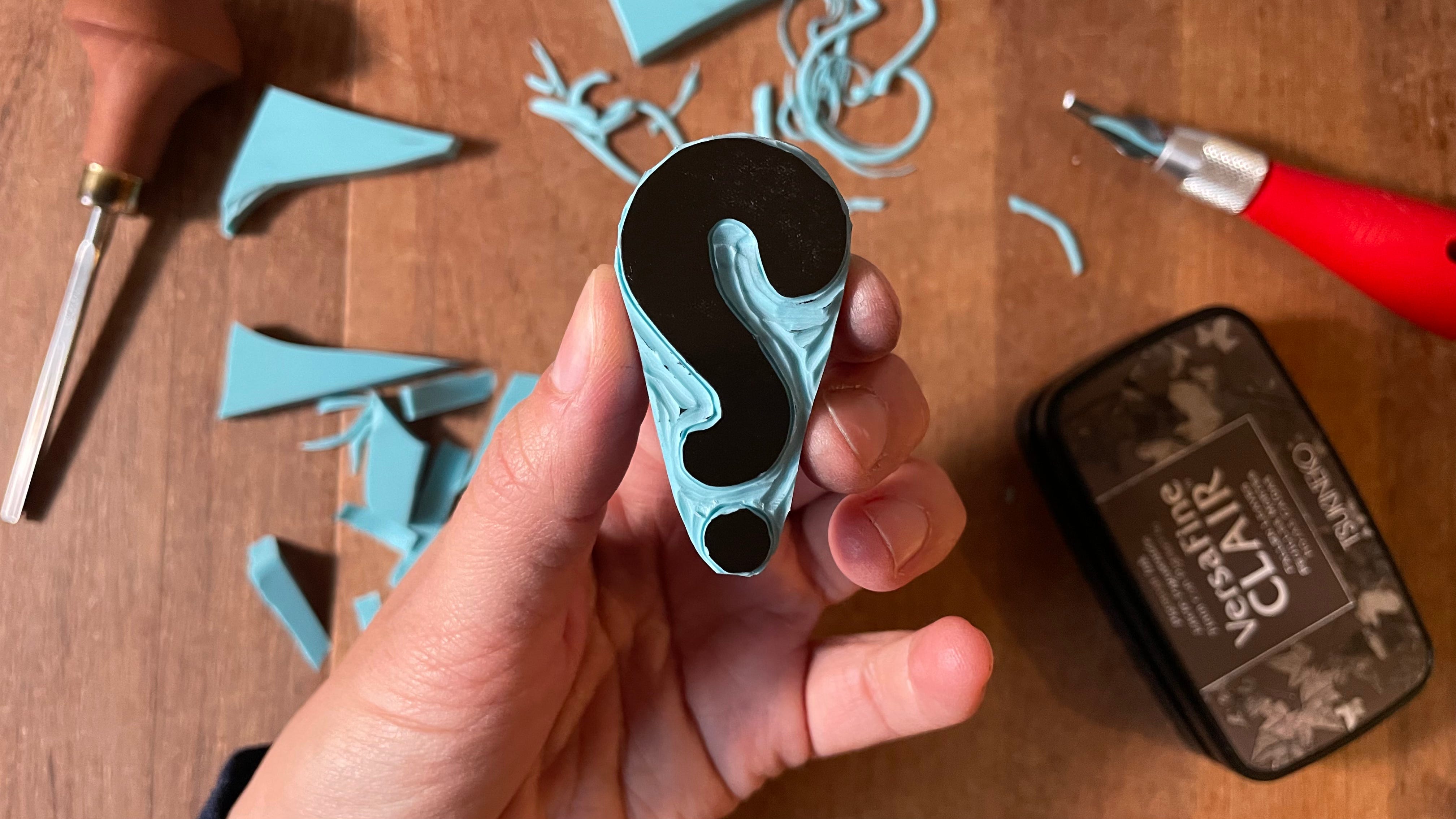
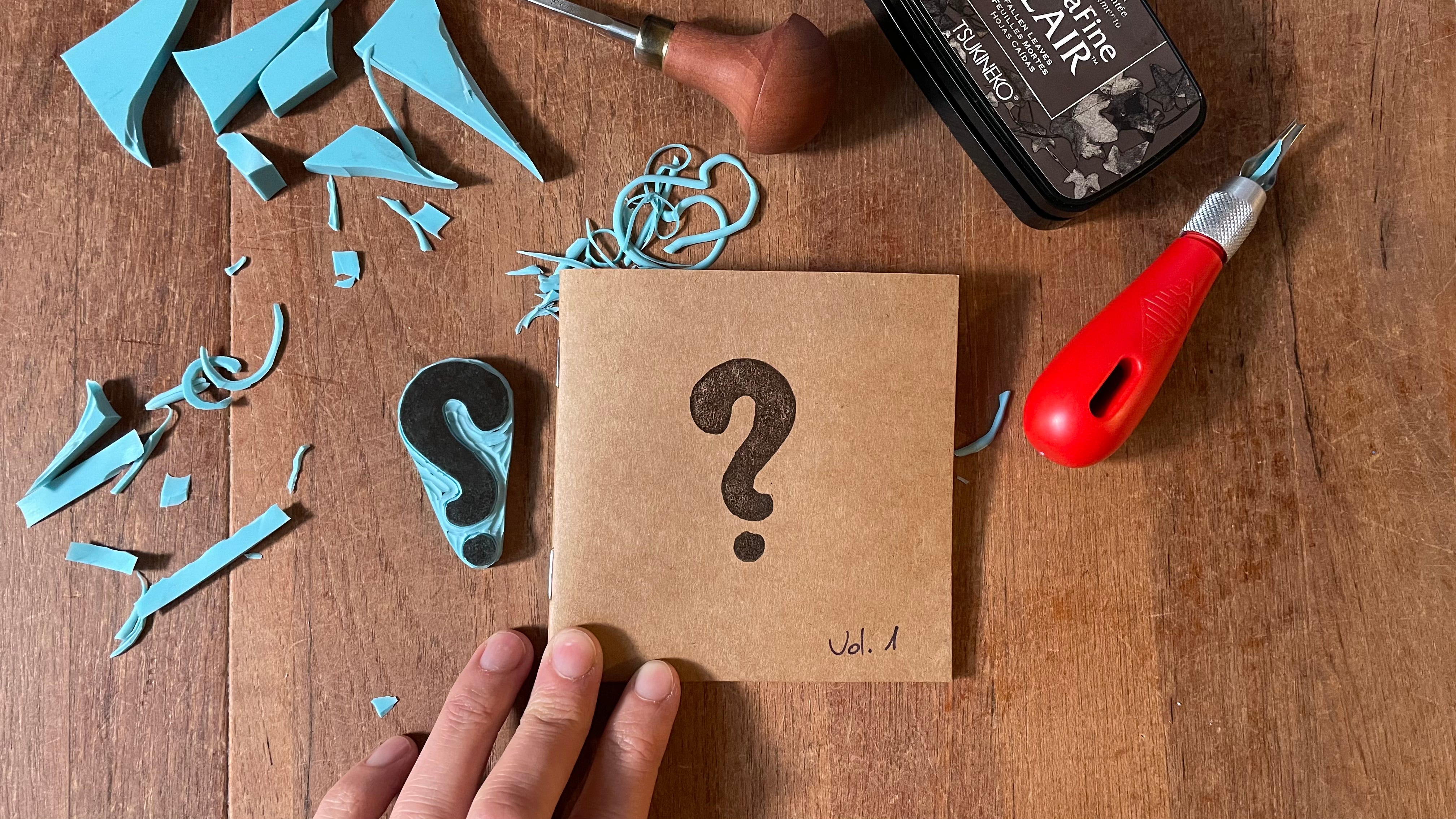
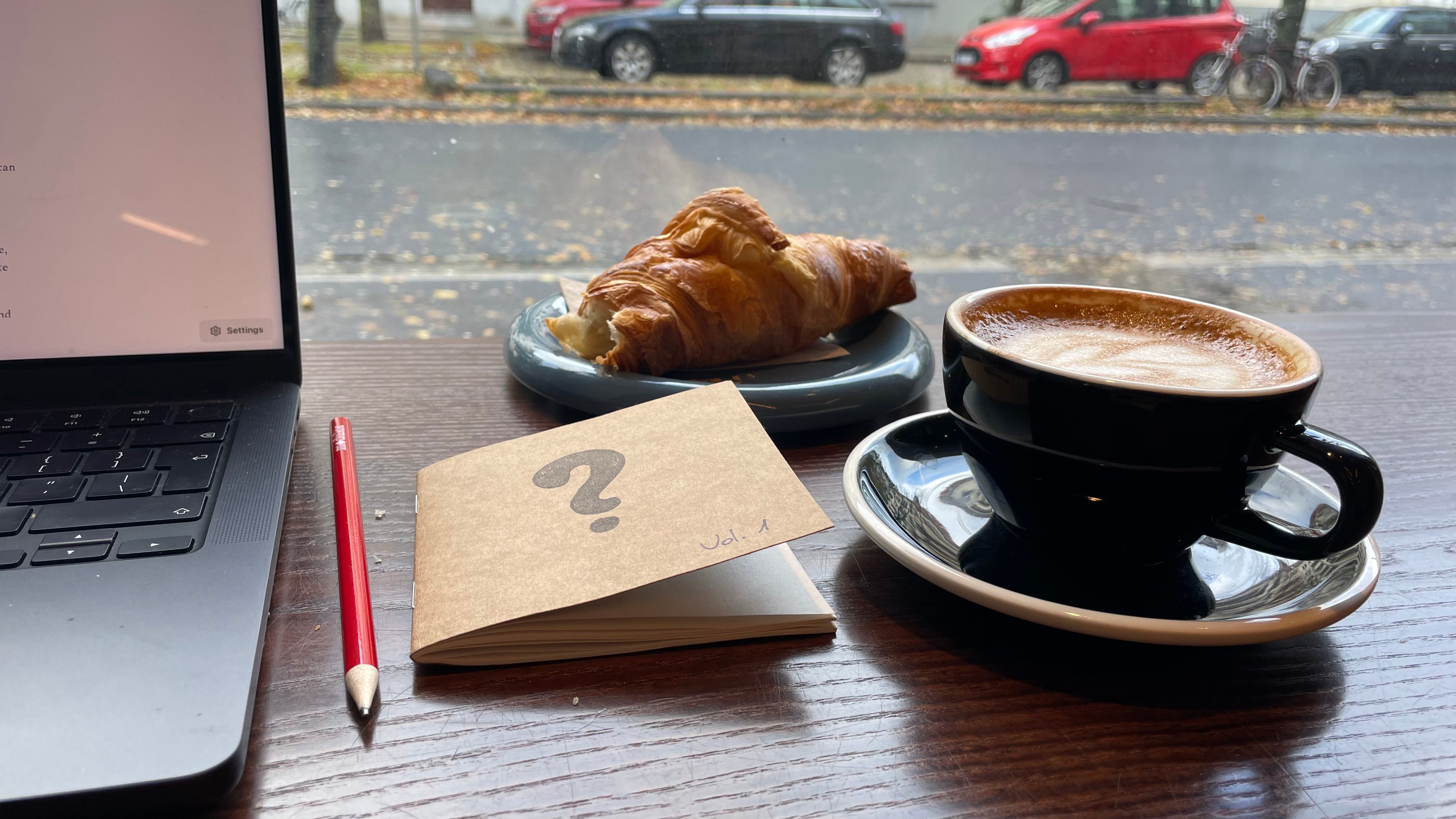
I recently made myself a notebook that easily fit in my pouch or pocket. I carry it around and whenever a small spark of curiosity appears - about an idea, technique, material or colour - I write it down. It’s mind-blowing how many questions I wrote down within a couple of days.
Don’t feel like carrying a notebook around? Open the notes app on your phone and start the list there. And when you finally have a day off to yourself, a free evening, or even a free half hour - look at that list. Pick one thing.
It doesn’t matter if it leads to something “useful”.
It doesn’t matter if it fails.
The point isn’t to answer the question - it’s to revive the habit of asking it.
Because the more you practice curiosity, the more it grows - like a muscle that gets stronger every time you use it.
A note from me
I’ve been thinking a lot about the dullness I felt at the start - the one that creeps in when I stay in doing mode for too long. I’ve realised that my creativity doesn’t need more structure or time management, it needs more play.
I’m working on that balance - allowing myself to play more while still managing everything else. But play takes courage. It means slowing down, experimenting, and being okay with things not working out. Most of my creative process actually lives in that space - in the trials, the half-formed ideas, the meh projects.
And I want to share more of that, because that’s the real heart of creativity - not the polished outcomes, but the curiosity that leads to them.
So this is as much a reminder to myself as it is to you:
Keep exploring. Keep asking. And be honest with yourself and others about it - keep being willing to look a little naive.
That’s where your creativity can breathe again.
A quick note:
I’m a designer and maker, not a trained writer - and English isn’t my first language. I use AI as a writing companion to help me express my thoughts more clearly and shape them into coherent text. The ideas, stories, and perspectives are all my own. Whenever I draw inspiration from another creator or source, I’ll mention it directly in the post.
Your question notebook is brilliant! It’s as exciting as another concept I’ve incorporated into my life called an Idea Garden. Thank you for sharing…encouraging curiosity is a wonderful & worthy endeavour. And in the spirit of questions, perhaps I will ask one! Your Substack has just crossed my path…which of your past posts is your favourite or that you would recommend to a new subscriber? Happy creating!