
Mastering Imperfection
Redefining perfection through handwork

Happy new year everyone!
It’s January again - that strange in-between moment when we wrap up the year behind us and start making plans for the year ahead.
This year, I’ve noticed a lot of articles arguing that January is actually the worst time to make changes or big decisions. Instead, we should all be in hibernation mode right now. Slowing down, cuddling, eating soup and conserving energy. Definitely not setting goals or reinventing our lives.
And yes - that makes total sense.
Still… this urge to make plans seems to be wired into me. It’s a new calendar year, and I can’t help but looking at it and asking questions. But for now, I restrain myself and ask just one:
What is one thing I really want to achieve this year?
Not the biggest thing. Not the hardest thing. Just something I genuinely want.
And at this point in time, that thing is: Mastering imperfection.
Yes. You read that right.
It sounds a bit odd, doesn’t it? imperfection and mastery don’t usually sit comfortably in the same sentence. One implies flaws and mistakes, while the other suggests control and excellence.
But stay with me - I promise this will make sense.
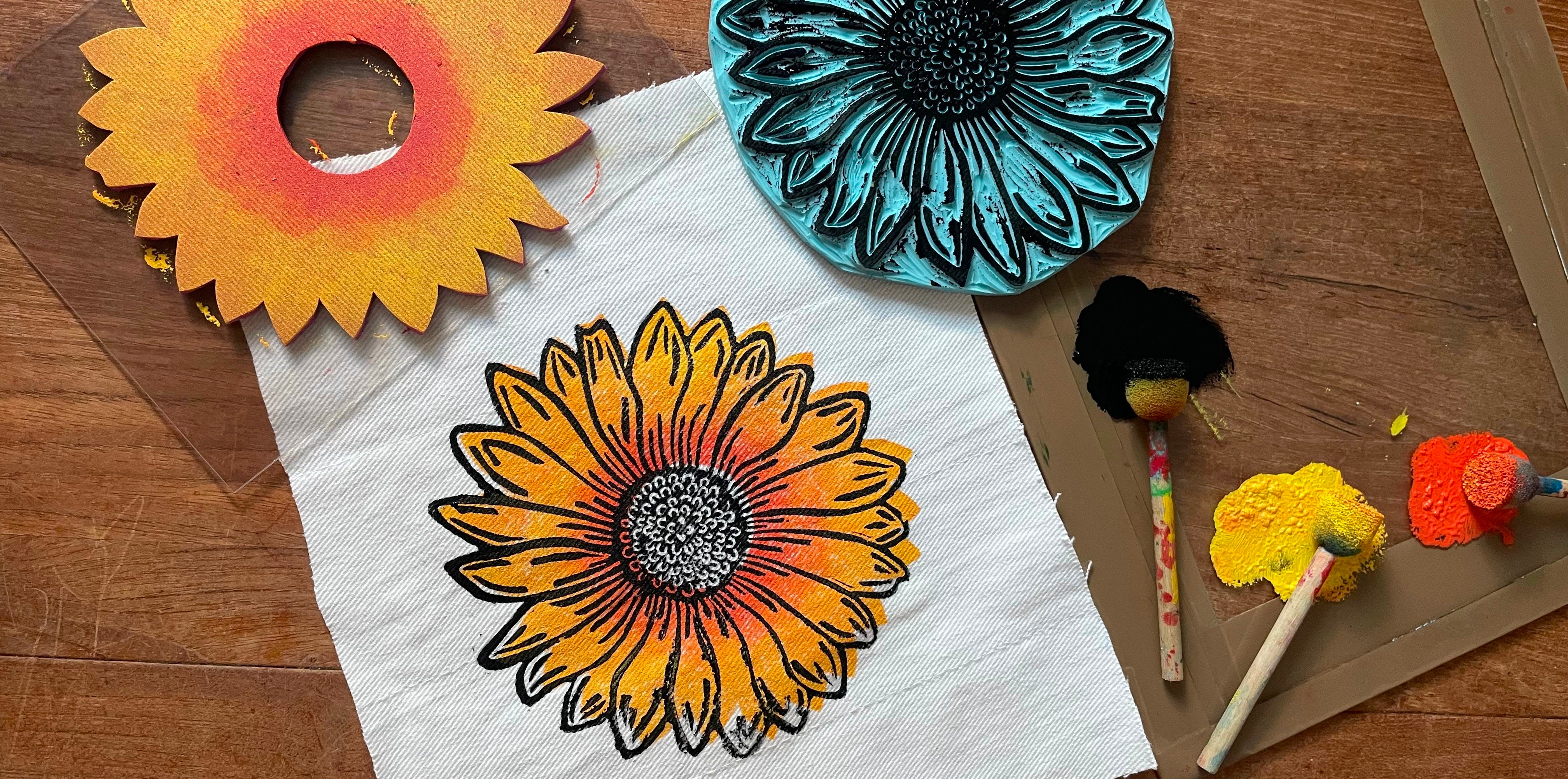
If you’ve been following my work you might have noticed that imperfection is a topic I keep returning to.
Everything I do is handmade, and I’m constantly learning. I don’t see that as a phase I’ll grow out of - I hope it’s something I never stop doing. And learning, almost by definition, comes with mistakes.
So far, my approach to those mistakes has mostly been about acceptance. Learning to live with them. Learning not to fight them. Learning to let things be imperfect.
This year, I want to take this one step further.
Instead of just accepting imperfections, I want to become more fluent in them. More intentional about how I work with them - and how they shape the final result.
To explain what I mean by that, we first need to talk about perfectionism.
Perfectionism
Perfectionism is the belief that there is a flawless outcome - and that it’s our responsibility to reach it. The belief that if we just try harder, plan better, practice more, we’ll eventually achieve something complete, polished, and beyond criticism.
The problem is: Perfection doesn’t actually exist.
At least not in real life, and definitely not in creative work.
And not only does it not exist - the pursuit of perfection often works against us.
Perfectionism tends to do three very unhelpful things:
It sets impossible standards
It turns mistakes into personal failures
And worst of all, it often stops us from starting - or finishing - anything at all
Instead of helping us grow, it keeps us stuck. We keep tweaking, correcting, redoing, and at one point we tend to just give up.
So if perfection isn’t achievable, maybe the answer isn’t to try harder - but to change what we’re aiming for.
Mastery isn’t flawlessness
When I say “mastering imperfection”, I don’t mean becoming better at hiding mistakes or lowering standards until we stop caring.
What I mean is this:
getting so comfortable with imperfections that we can work with them - and sometimes even want them.
Because flaws and mistakes are not hindering our process, they are the process. and once we stop trying to get rid of them, three much more interesting things start to happen.
We accept the imperfections as inevitable
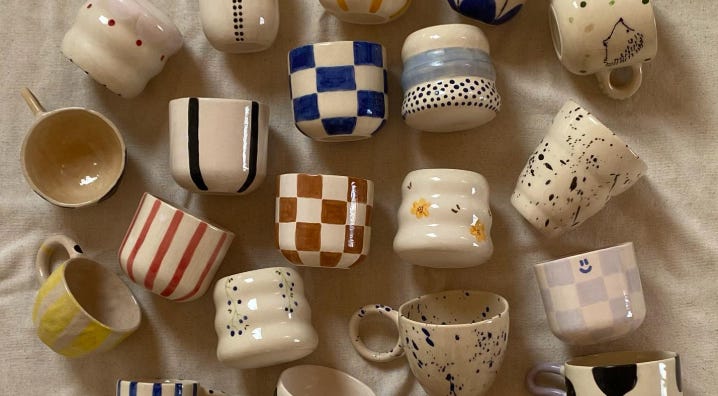
Think of a mug made on a pottery wheel.
No matter how skilled the potter is, the mug will never be perfectly symmetrical. The rim might wobble slightly. One side might be a little thicker than the other. Tiny marks from the potter’s hands might remain visible.
When you hold a mug like this, you don’t think, this was done wrong.
You think this was made by a person.
Those irregularities aren’t seen as mistakes. They’re what make the mug recognisable as handmade in the first place. They tell you something about the process, the material, the human touch.
Accepting flaws in our work means recognising them upfront. Not treating them as evidence of failure, but as the natural outcomes of working with real materials in the real world.
We use imperfections as learning opportunities
Now imagine the potter notices that the rim keeps collapsing on one side.
They could see this as a mistake and dwell on their failure to create a mug - or they could get curious. Is the clay too wet? Is the pressure uneven? is this shape asking for a slightly thicker rim?
Instead of asking: How do I prevent this next time?
They ask: What is this teaching me?
Every uneven edge carries information. Every unexpected result offers feedback. Irregularities becomes part of the conversation between the maker and the material.
This is where learning actually happens - not before, not after, but right here, in the middle of the process.
We learn to work with imperfection
And then something interesting happens.
The potter might decide not to “fix” the uneven rim at all. They might lean into it. Let it stay, or maybe even exaggerate it slightly.
At this point, the irregularity is no longer a problem to solve - it becomes part of the design.
This is where mastery comes in and what I’m aiming to achieve this year.
Not forcing the material to behave, but responding to what’s already there. Including it. Letting the imperfection shape the final object instead of fighting against it.
Loving the imperfection doesn’t mean giving up
This part feels important to say.
Getting comfortable with imperfect results doesn’t mean we stop caring. It doesn’t mean we don’t learn, improve, or aim to do things better next time.
It means we stop treating flaws and mistakes as an emergency.
There’s a Japanese concept called wabi-sabi, which finds beauty in the imperfect. Those things that are unfinished, or slightly worn. Why? Because they’re honest. They show time, use, material, and human presence.
When we apply this way of seeing to creative work, irregularities stop being something to avoid or to fix. They become something to work with. Something that makes the result unmistakably human - and often uniquely ours.
That’s the kind of mastery I’m interested in.
In practice
While working on this piece I caught myself doing something familiar.
I kept editing and re-editing, worrying that my ideas weren’t clear enough, my text not polished enough… you get where I’m going - I was chasing perfection. I was doing the exact thing I was writing about
So I’m going to stop here :)
The article may not be perfect, but it’s honest. It reflects where I am right now - in the middle of thinking about imperfection, not at the end of it.
And maybe that’s the perfect way to end an article about imperfections: not by fixing it one last time, but by letting it go.
A quick note:
I’m a designer and maker, not a trained writer - and English isn’t my first language. I use AI as a writing companion to help me express my thoughts more clearly and shape them into coherent text. The ideas, stories, and perspectives are all my own. Whenever I draw inspiration from another creator or source, I’ll mention it directly in the post.
I appreciate your thoughts and your art. I often choose asymmetrical design and edges instead of trying to fully square everything up …to release me from chasing an unreachable ideal. Thanks for sharing!